
How Virtual Card Balances, Wallet Balances, and Stablecoins Work Together
Digital payments are changing quickly, but useful products still depend on clear rules. This Ethorus guide focuses on wallet balance, card balance, stablecoin funding and explains the topic from a practical user…
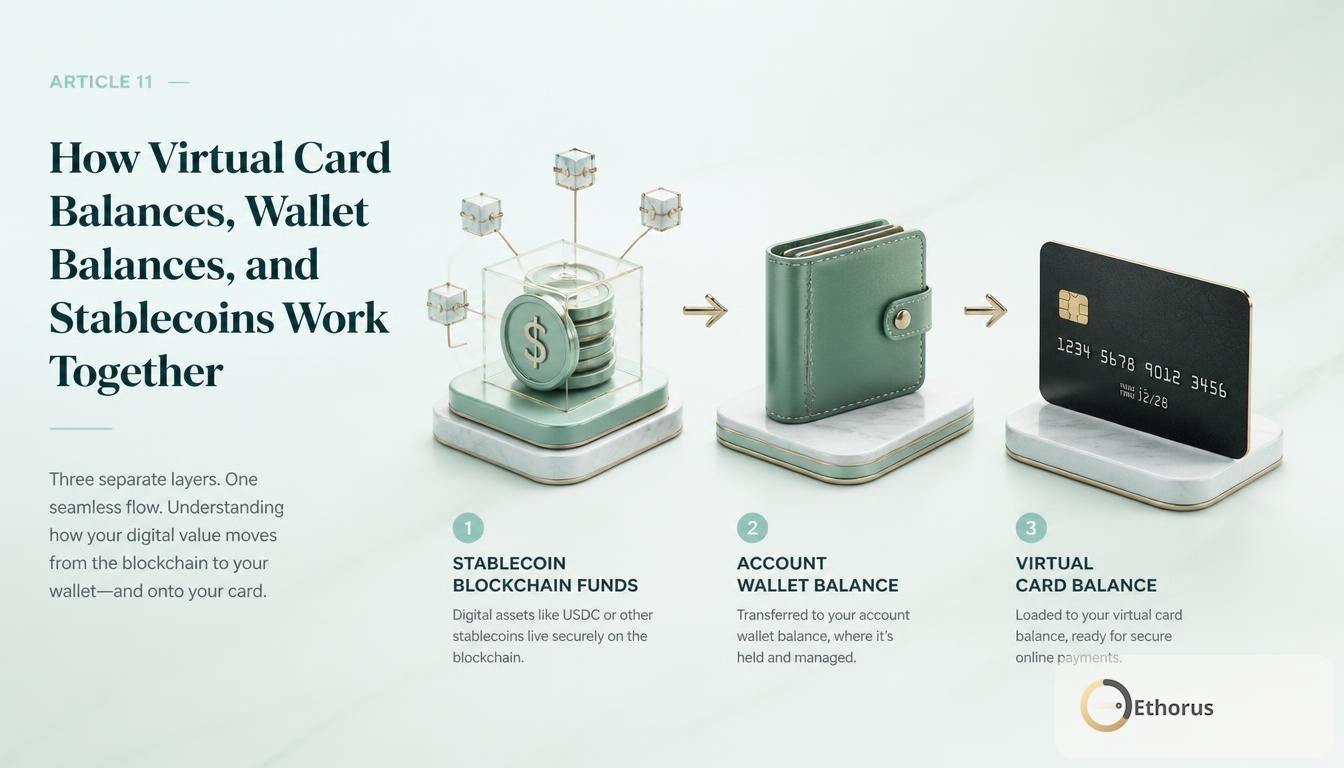
Digital payments are changing quickly, but useful products still depend on clear rules. This Ethorus guide focuses on wallet balance, card balance, stablecoin funding and explains the topic from a practical user perspective.
The core idea
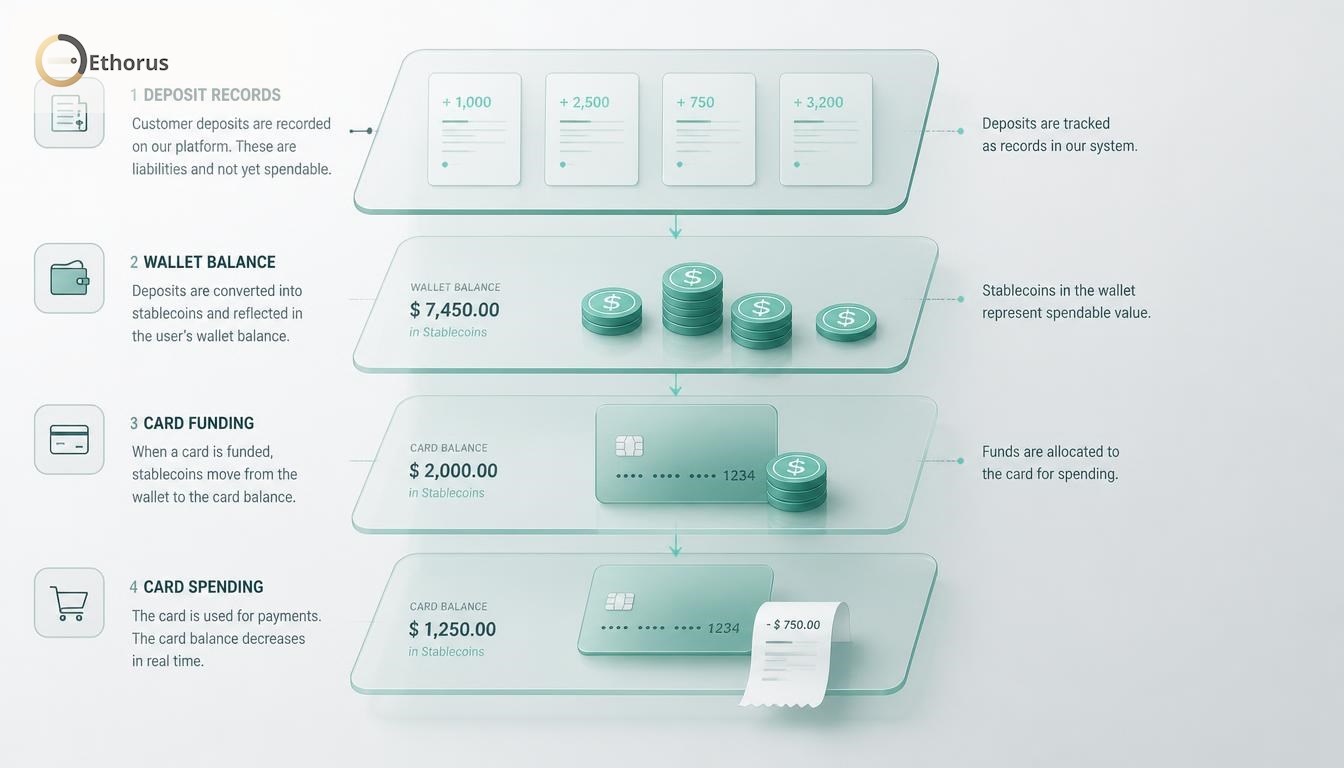
A wallet balance and a virtual card balance serve different purposes. The wallet represents funds available in the platform account; the card balance represents funds already moved to a specific card.
How it works in practice
Stablecoin deposits can increase the wallet after successful blockchain verification. Card funding is then a separate action that may include a fee or minimum amount.
What users should pay attention to
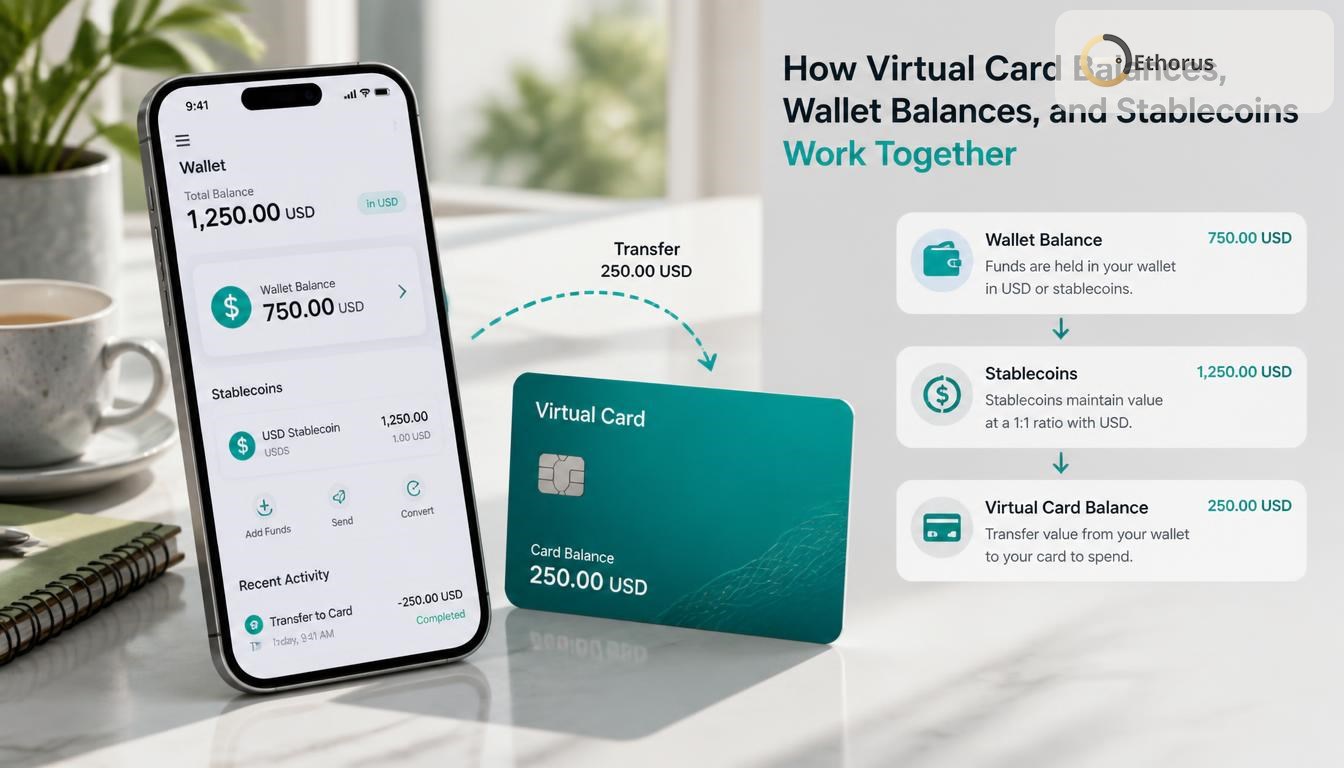
Keeping these ledgers separate makes transaction history clearer: deposits belong to the wallet, card top-ups belong to the card funding flow, and merchant charges belong to card spending.
A clearer payment experience
Good payment design should make the important facts visible before a user acts: the selected network, the amount, applicable fees, the destination of funds, and the current status. Successful activity should remain available in transaction history, while failed, pending, or exceptional cases should be clearly distinguished.
For Ethorus, this means treating blockchain payments, account wallet balances, virtual card balances, card funding, withdrawals, and referral rewards as related but separate records. That separation makes the system easier to understand and easier to reconcile.
Final perspective
The most useful digital payment products are not the ones that hide complexity with broad promises. They are the ones that reduce unnecessary steps while keeping the important rules visible. As virtual cards, stablecoins, and global payment networks continue to converge, transparency and reliable server-side verification will matter as much as speed.
This article is for general informational purposes and does not constitute financial, investment, legal, or tax advice.