
Virtual Cards vs. Traditional Bank Cards: What's the Difference?
Digital payments are changing quickly, but useful products still depend on clear rules. This Ethorus guide focuses on virtual card versus physical bank card, online commerce and explains the topic from a practical user…

Digital payments are changing quickly, but useful products still depend on clear rules. This Ethorus guide focuses on virtual card versus physical bank card, online commerce and explains the topic from a practical user perspective.
The core idea
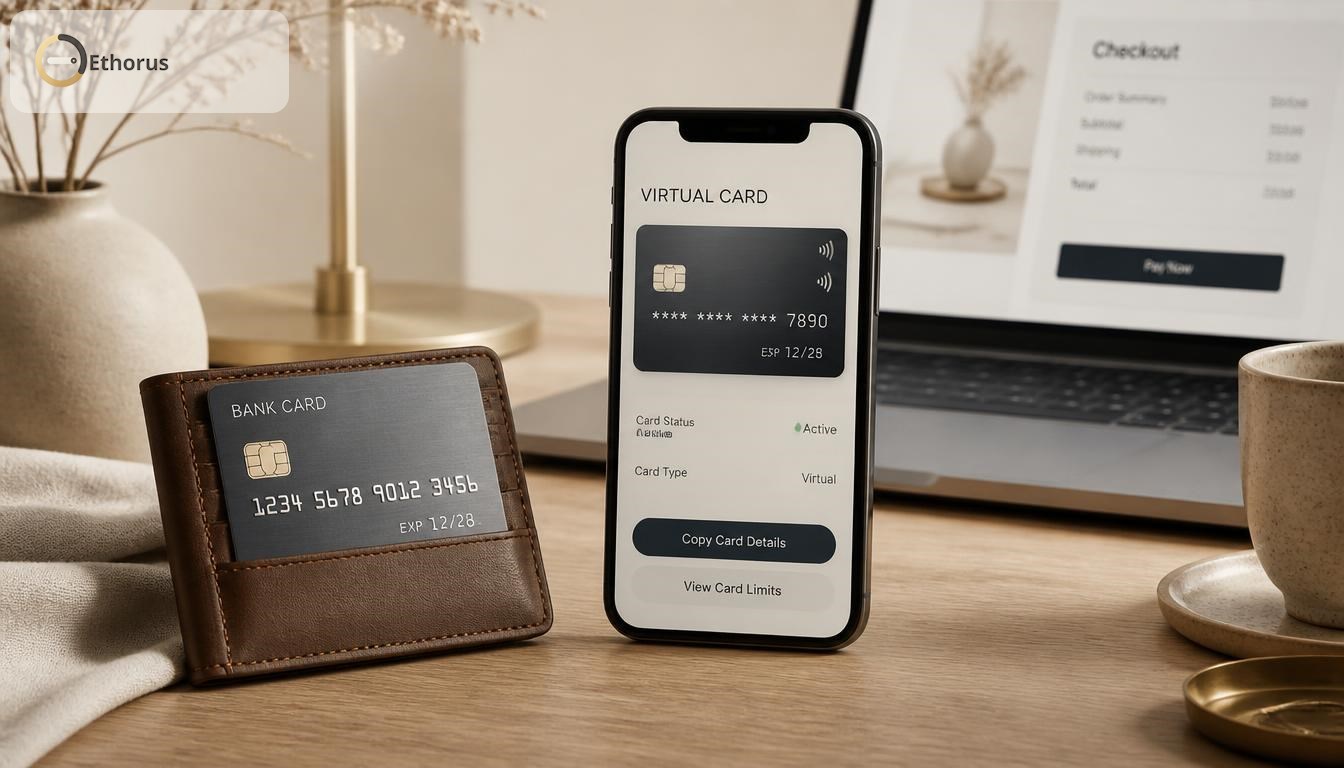
Traditional bank cards are usually delivered as physical products and commonly connect directly to a bank account. Virtual cards are delivered digitally and can be managed as part of an online account.
How it works in practice
For digital spending, virtual cards can make it easier to separate subscriptions or online purchases from other payment credentials. They still contain sensitive information and require the same care as physical card details.
What users should pay attention to
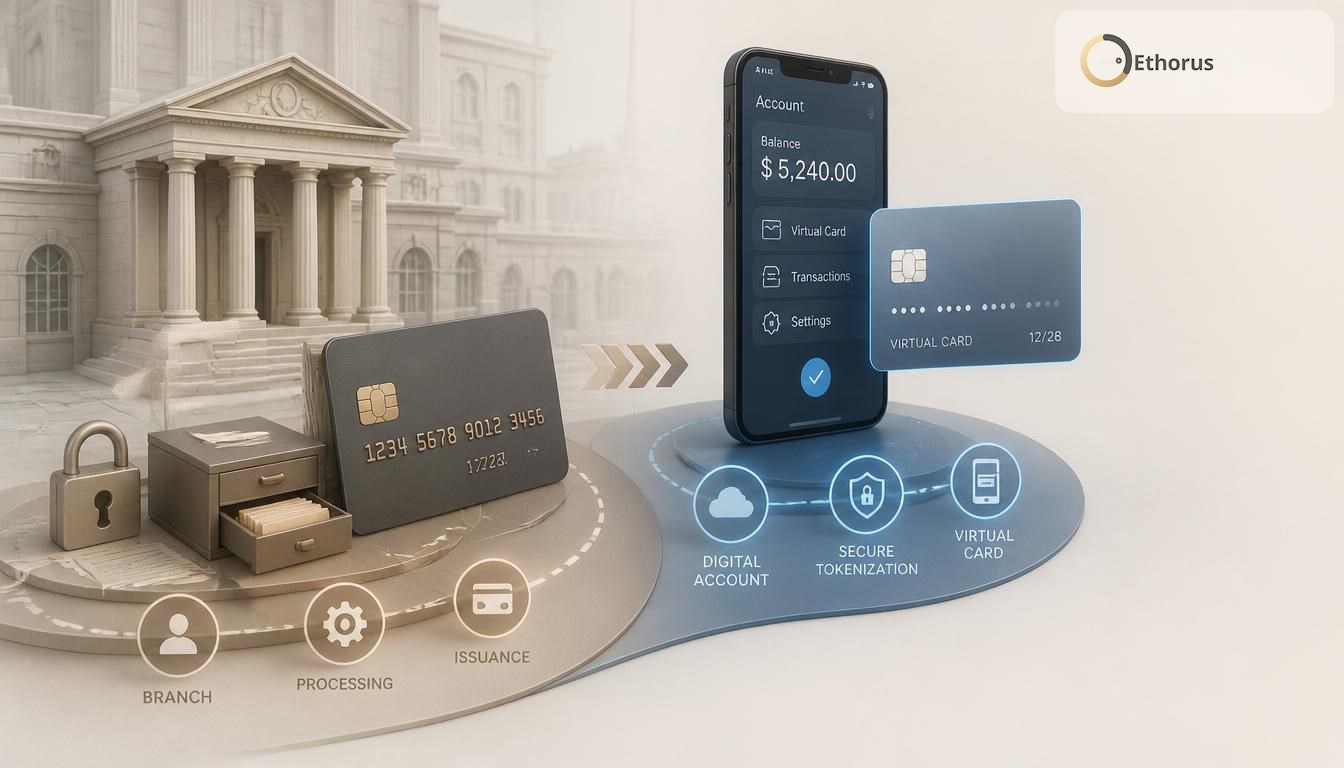
Neither model is universally better. Physical cards remain useful for in-person scenarios, while virtual cards naturally fit online-first workflows.
A clearer payment experience
Good payment design should make the important facts visible before a user acts: the selected network, the amount, applicable fees, the destination of funds, and the current status. Successful activity should remain available in transaction history, while failed, pending, or exceptional cases should be clearly distinguished.
For Ethorus, this means treating blockchain payments, account wallet balances, virtual card balances, card funding, withdrawals, and referral rewards as related but separate records. That separation makes the system easier to understand and easier to reconcile.
Final perspective
The most useful digital payment products are not the ones that hide complexity with broad promises. They are the ones that reduce unnecessary steps while keeping the important rules visible. As virtual cards, stablecoins, and global payment networks continue to converge, transparency and reliable server-side verification will matter as much as speed.
This article is for general informational purposes and does not constitute financial, investment, legal, or tax advice.