
What Happens After You Send USDT? A Simple Guide to Blockchain Payment Confirmation
Digital payments are changing quickly, but useful products still depend on clear rules. This Ethorus guide focuses on USDT transaction, blockchain confirmations, payment verification and explains the topic from a…
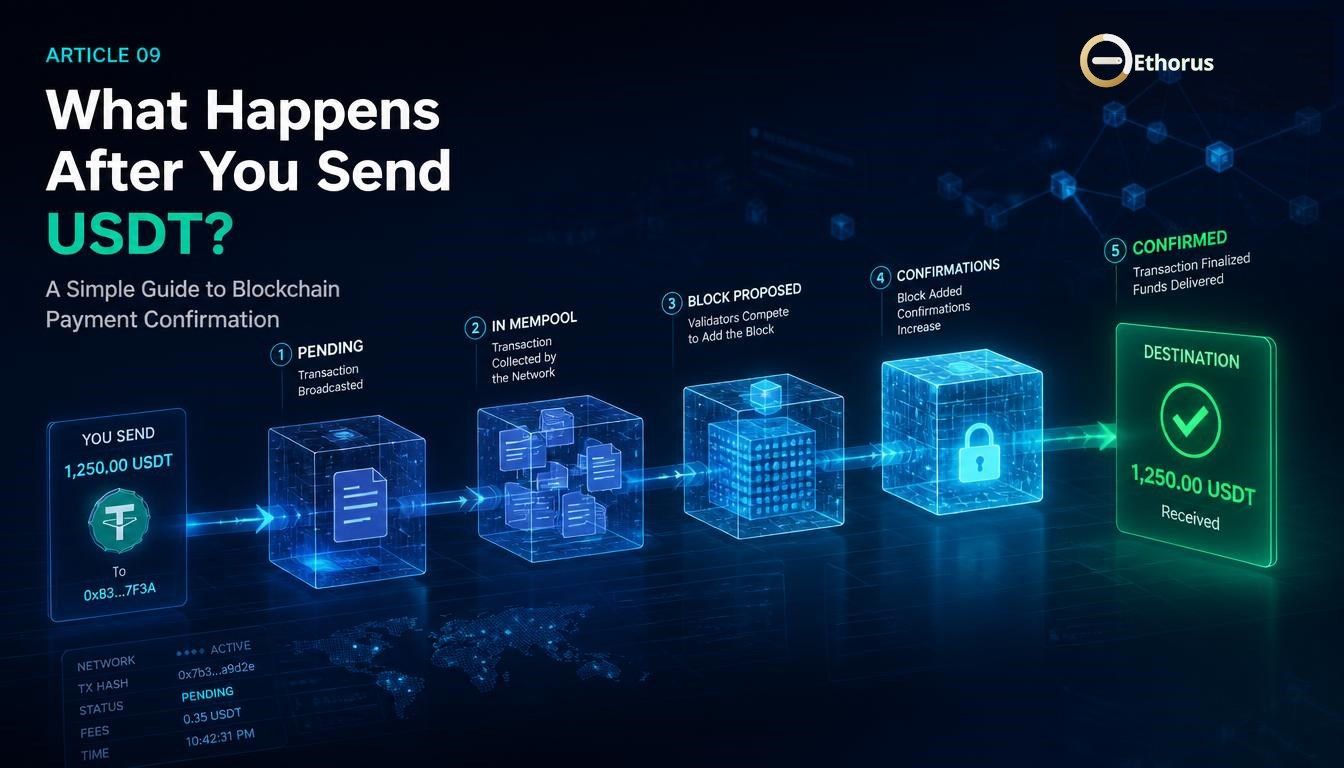
Digital payments are changing quickly, but useful products still depend on clear rules. This Ethorus guide focuses on USDT transaction, blockchain confirmations, payment verification and explains the topic from a practical user perspective.
The core idea
After a user sends USDT, the payment is not instantly equivalent to account credit. The transaction must be found on the correct network and validated against the order.
How it works in practice
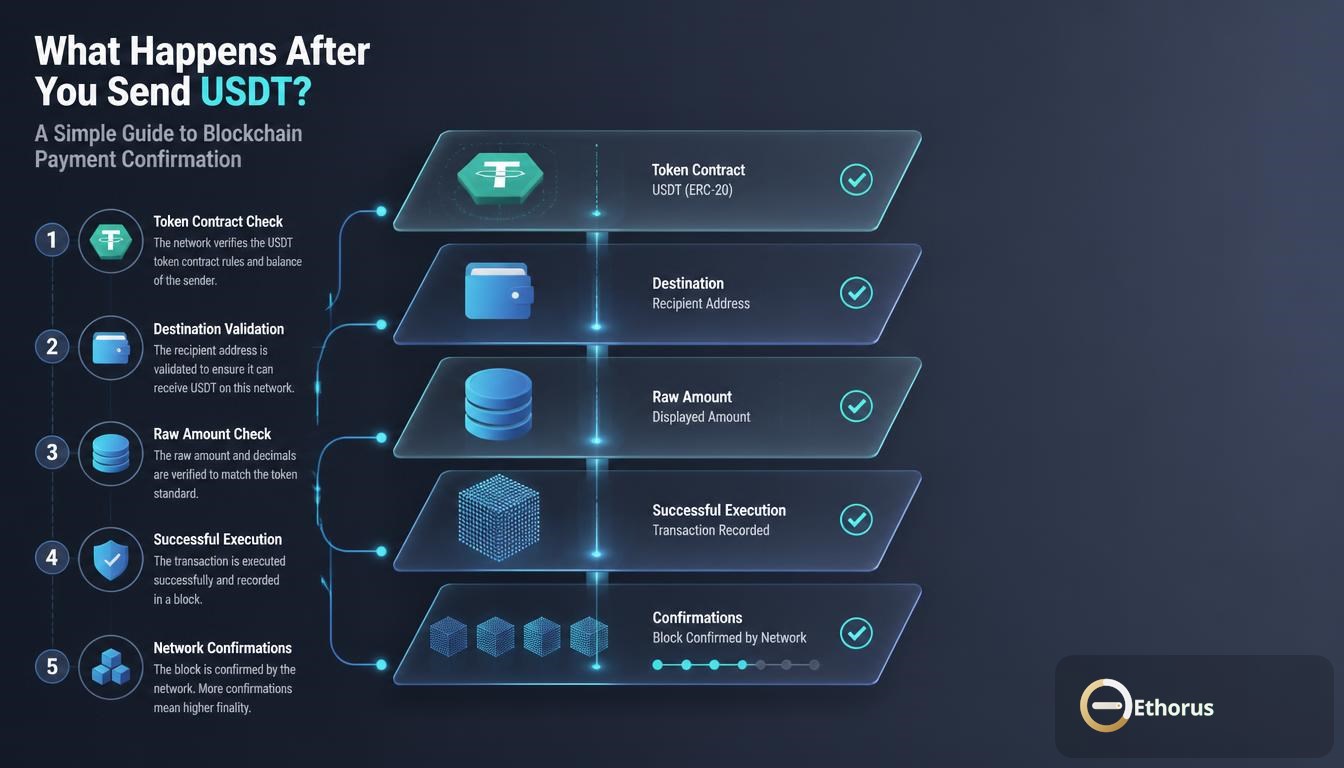
A verifier checks token contract, destination, raw amount, execution status, and confirmations. A visible transaction with too few confirmations should remain pending rather than being treated as failed.
What users should pay attention to
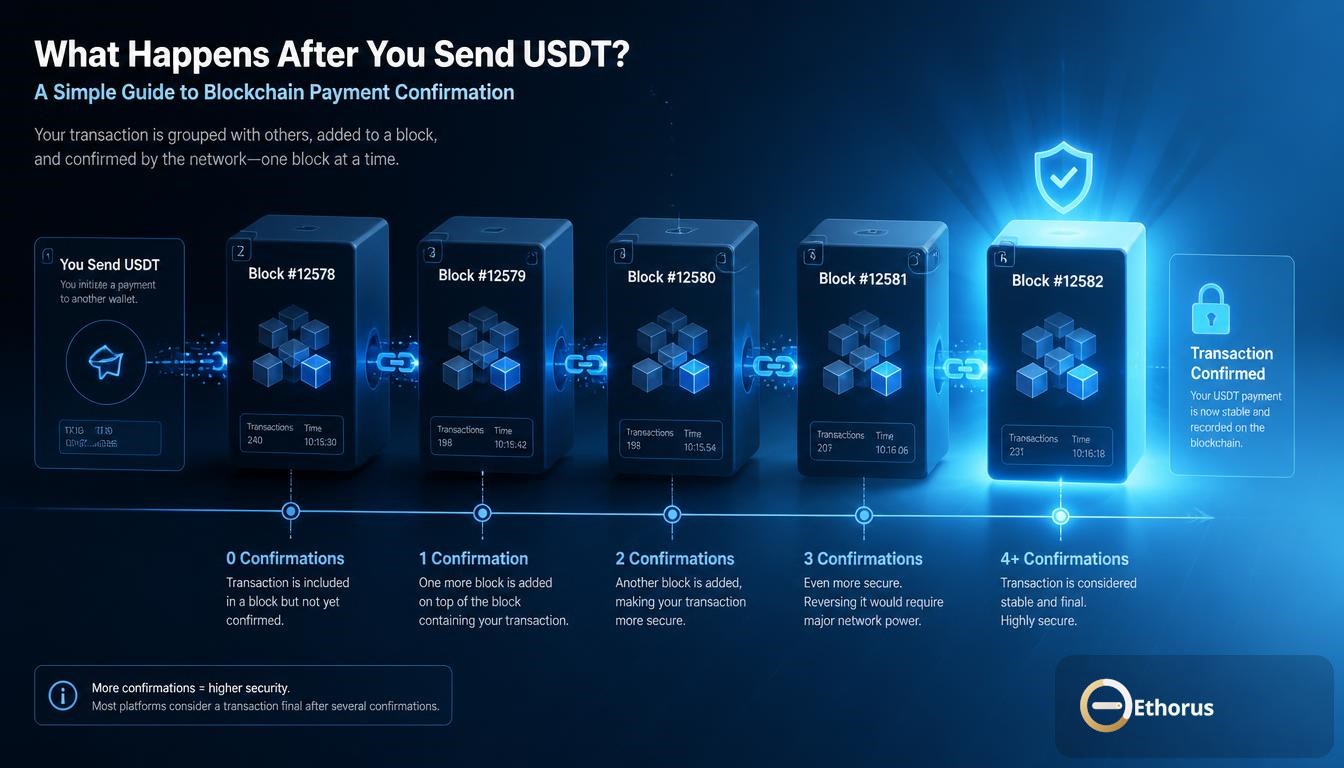
Once the required confirmation threshold is reached and the event is unique, the platform can settle the order exactly once. Idempotency protects against duplicate callbacks or rescans.
A clearer payment experience
Good payment design should make the important facts visible before a user acts: the selected network, the amount, applicable fees, the destination of funds, and the current status. Successful activity should remain available in transaction history, while failed, pending, or exceptional cases should be clearly distinguished.
For Ethorus, this means treating blockchain payments, account wallet balances, virtual card balances, card funding, withdrawals, and referral rewards as related but separate records. That separation makes the system easier to understand and easier to reconcile.
Final perspective
The most useful digital payment products are not the ones that hide complexity with broad promises. They are the ones that reduce unnecessary steps while keeping the important rules visible. As virtual cards, stablecoins, and global payment networks continue to converge, transparency and reliable server-side verification will matter as much as speed.
This article is for general informational purposes and does not constitute financial, investment, legal, or tax advice.